
The Hidden Dangers of Outdated Wiring in Older Homes
Older homes carry a lot of charm, but the wiring behind the walls often tells a different story. Electrical systems installed decades ago were built for a much simpler era, one without central air conditioning, microwaves, gaming consoles, or a dozen phone chargers running at once. When a home in Oklahoma still relies on wiring from the 1950s, 1960s, or 1970s, the risk of trouble climbs every single year. Insulation breaks down over time, connections loosen, and materials that were once considered safe are now known to cause fires. Many homeowners have no idea their walls hide a serious hazard because outdated wiring rarely gives an obvious warning before it fails. A flickering light or a warm outlet cover can be the only clue that something dangerous is developing. Understanding what lurks inside an aging electrical system is the first step toward keeping your family safe. This guide breaks down the real dangers, the warning signs to watch for, and the smart upgrades that protect your home for the long haul.
Common Types of Outdated Wiring Found in Older Homes
Not all outdated wiring looks the same, and the age of your home usually points to the type of system hiding behind the drywall. Homes built before 1950 often contain a very old method that runs individual conductors through ceramic tubes and knobs. Houses constructed in the 1960s and early 1970s sometimes used aluminum branch wiring, which behaves very differently from the copper we rely on today. Cloth insulated conductors show up in many mid century homes, and that fabric coating crumbles as the decades pass. Two prong outlets without a ground path are another telltale sign of an older electrical system that was never brought up to modern standards. Each of these systems came with its own set of problems that only get worse with age. Knowing which type you have helps you understand the level of risk you are living with. A licensed electrician can identify the wiring type quickly and tell you what needs attention first.
Knob and Tube Wiring Found in Older Homes
Knob and tube wiring was the standard method for delivering electricity in American homes from the late 1800s through the 1940s, and plenty of Oklahoma properties still contain it today. The system uses porcelain knobs to anchor the wires and porcelain tubes to guide them safely through wooden framing. In its day the design worked well because it kept conductors separated and allowed heat to dissipate into open air. The problem is that this wiring was never designed to handle the electrical load of a modern household. It has no ground conductor, which means it offers no safe path for stray current during a fault. Over the years the rubber and cloth insulation dries out, cracks, and flakes away, leaving bare copper exposed inside walls and attics. Homeowners often make the situation worse by burying the wiring under blown in insulation, which traps heat that the original design needed to release.
The dangers of knob and tube wiring grow sharper as people add outlets, extension cords, and power strips to keep up with today’s appliances. Every added device pulls more current through conductors that were sized for a fraction of that demand. Splices and connections in these old systems were often taped by hand and hidden inside walls, and that tape degrades into a brittle shell over the decades. When insulation fails at a splice, the exposed wire can arc against nearby framing and start a slow burning fire inside the wall cavity. Many insurance companies now refuse to cover homes that still contain active knob and tube circuits because the fire risk is well documented. That alone tells you how seriously the industry takes this hazard. Replacing knob and tube wiring is not a small project, but it is one of the most important safety investments an older home can receive.
If your home still has any knob and tube circuits, the safest move is a professional evaluation followed by a rewiring plan. An electrician will trace which circuits are still live, which have been abandoned, and which are creating a hazard right now. In most cases the recommendation is to replace the old conductors with modern grounded cable that meets current code. This work restores a safe ground path, adds capacity for your real world electrical needs, and removes the fire risk baked into the aging system. Ready to replace outdated wiring in your older home? Click here for our electrical wiring service. A proper rewire also opens the door to adding the outlets and circuits that make daily life easier. Living with knob and tube wiring is a gamble that gets riskier with each passing year.
Aluminum Wiring Found in Older Homes
Aluminum branch wiring appeared widely during the mid 1960s and continued into the mid 1970s, driven by a spike in copper prices that pushed builders toward a cheaper metal. On paper the switch seemed reasonable, but aluminum behaves very differently from copper in ways that create long term safety concerns. Aluminum expands and contracts more than copper each time a circuit heats up and cools down, and that constant movement loosens connections over time. Loose connections increase electrical resistance, and higher resistance produces heat right at the point where wires meet outlets, switches, and splices. Aluminum also oxidizes when exposed to air, and that oxide layer resists the flow of current far more than copper oxide does. The combination of loosening and oxidation turns ordinary connection points into hot spots that can scorch, melt, and eventually ignite. This is why aluminum wired homes see a much higher rate of connection failures than copper wired homes of the same age.
The trouble with aluminum wiring almost never shows up in the middle of a wire run; it hides at the terminations. Outlets and switches installed decades ago were often not rated for aluminum conductors, which made a bad situation worse from day one. Over time a homeowner might notice warm cover plates, a faint smell of hot plastic, lights that flicker for no reason, or outlets that stop working intermittently. These are not minor quirks of an old house; they are red flags that a connection is overheating behind the wall. Because the heat builds slowly and quietly, many families live with the danger for years without realizing it. A single loose aluminum connection can reach temperatures high enough to char surrounding wood and insulation. That is the exact chain of events that turns an aging electrical system into a house fire.
The good news is that aluminum wiring does not always require a full rewire to become safe. Licensed electricians use approved connection methods, such as specialized connectors that bond aluminum to copper pigtails at every device. This proven repair restores solid, low resistance connections at the points where failures actually happen. In some homes with widespread damage or heavy modification, a complete rewire remains the better long term solution. An electrician evaluates the condition of the system and recommends the right path for your specific situation. Concerned about aluminum wiring in your home? Click here to schedule an electrical inspection. Addressing aluminum wiring now costs far less than dealing with the aftermath of an electrical fire later.
Cloth and Ungrounded Wiring Found in Older Homes
Cloth insulated wiring was common in homes built from the 1920s through the 1960s, and it presents a quiet but serious hazard as it ages. The conductors themselves are usually copper, which is good news, but the fabric and early rubber insulation wrapped around them was never meant to last a century. Heat, humidity, and simple time cause that cloth covering to grow brittle, crack, and flake off in pieces. Once the insulation fails, bare copper sits exposed inside junction boxes, walls, and attics where a single touch or spark can trigger a short. Rodents make the problem worse by chewing through the weakened covering to reach the framing beyond. Attic heat in Oklahoma summers accelerates the breakdown, baking the old insulation until it barely clings to the wire. What was once a safe covering becomes a crumbling hazard that no longer does its job.
Ungrounded wiring is a related danger that shows up in many older homes across our service area. You can spot it easily by looking for outlets with only two slots and no round grounding hole. Without a ground path, there is nowhere for stray electrical current to go safely during a fault. That missing ground turns everyday appliances into potential shock hazards, especially in kitchens, bathrooms, and other areas near water. Some homeowners try to hide the problem by swapping in modern three prong outlets, which is dangerous because it creates the false impression of protection that does not exist. Sensitive electronics also suffer in ungrounded systems, since they have no clean reference point and no defense against surges. An ungrounded home simply cannot support the safety devices that modern living requires.
Correcting cloth and ungrounded wiring restores both safety and function to an older electrical system. An electrician can replace deteriorated cloth conductors, add proper grounding, and install the protective devices that code now demands. Grounding upgrades often go hand in hand with the addition of GFCI protection in wet areas and AFCI protection to guard against arc faults. These improvements dramatically lower the risk of shock and fire while bringing the home closer to current standards. In many cases the work can be staged over time to fit a homeowner’s budget and priorities. A thorough evaluation reveals exactly which circuits need attention and in what order. Investing in these repairs protects your family and preserves the value of your home for years to come.
Warning Signs of Dangerous Outdated Wiring in Your Home
Outdated wiring rarely announces itself with a dramatic failure; instead it drops subtle hints that many homeowners learn to ignore. A breaker that trips over and over, lights that dim when the air conditioner kicks on, and outlets that feel warm to the touch all point to an overworked or failing system. A faint smell of burning plastic near an outlet or panel is one of the most urgent warnings a home can give. Discolored or scorched outlet covers reveal heat damage that has already begun behind the wall. Frequent flickering, buzzing sounds from switches, and mild shocks when you touch a plug are all signs that something is wrong. These symptoms tend to appear gradually, which is exactly why they are so easy to dismiss. Recognizing them early gives you the chance to act before a small problem becomes a fire. Paying attention to how your electrical system behaves is one of the simplest ways to protect your household.
Breaker and Panel Warning Signs of Outdated Wiring
Your electrical panel is the heart of the whole system, and it often reveals the first signs that outdated wiring is in trouble. Breakers exist to trip and cut power when a circuit draws too much current, so frequent tripping is a message worth listening to. In an older home, repeated tripping usually means the wiring and panel can no longer keep up with modern electrical demand. Some aging homes still contain panel brands that are now known to be defective, including models that fail to trip when they should. A breaker that does not trip during an overload leaves the circuit unprotected and allows dangerous heat to build unchecked. If you have a panel that feels warm, hums loudly, or shows any sign of rust or scorching, it needs professional attention right away. These are not problems to watch and wait on.
Fuse boxes are another clear sign that a home’s electrical system belongs to an earlier era. Many older Oklahoma homes still rely on fuses rather than modern breakers, and while fuses can work, they come with real limitations. Homeowners sometimes replace a blown fuse with one rated for higher amperage to stop the nuisance of repeated failures. That shortcut is extremely dangerous because it allows more current to flow than the wiring can safely handle. The wires overheat, the insulation degrades, and the risk of fire climbs sharply. A fuse box also usually signals that the entire service is undersized for the way families live today. Upgrading from a fuse box to a modern panel is one of the most valuable safety improvements an older home can receive.
An outdated or undersized panel affects far more than convenience; it shapes the safety of every circuit in the house. Modern panels support breakers with built in arc fault and ground fault protection that older equipment simply cannot provide. Upgrading the panel also adds capacity for the electric vehicle chargers, heat pumps, and high draw appliances that define modern living. When an electrician replaces an old panel, they inspect the connected wiring and identify hazards that were hidden for decades. Need a safer, higher capacity electrical panel? Click here for our electrical panel installation service. A panel upgrade lays the foundation for a safe and reliable electrical system throughout the home. It is often the single most impactful step an older home can take.
Outlet and Lighting Warning Signs of Outdated Wiring
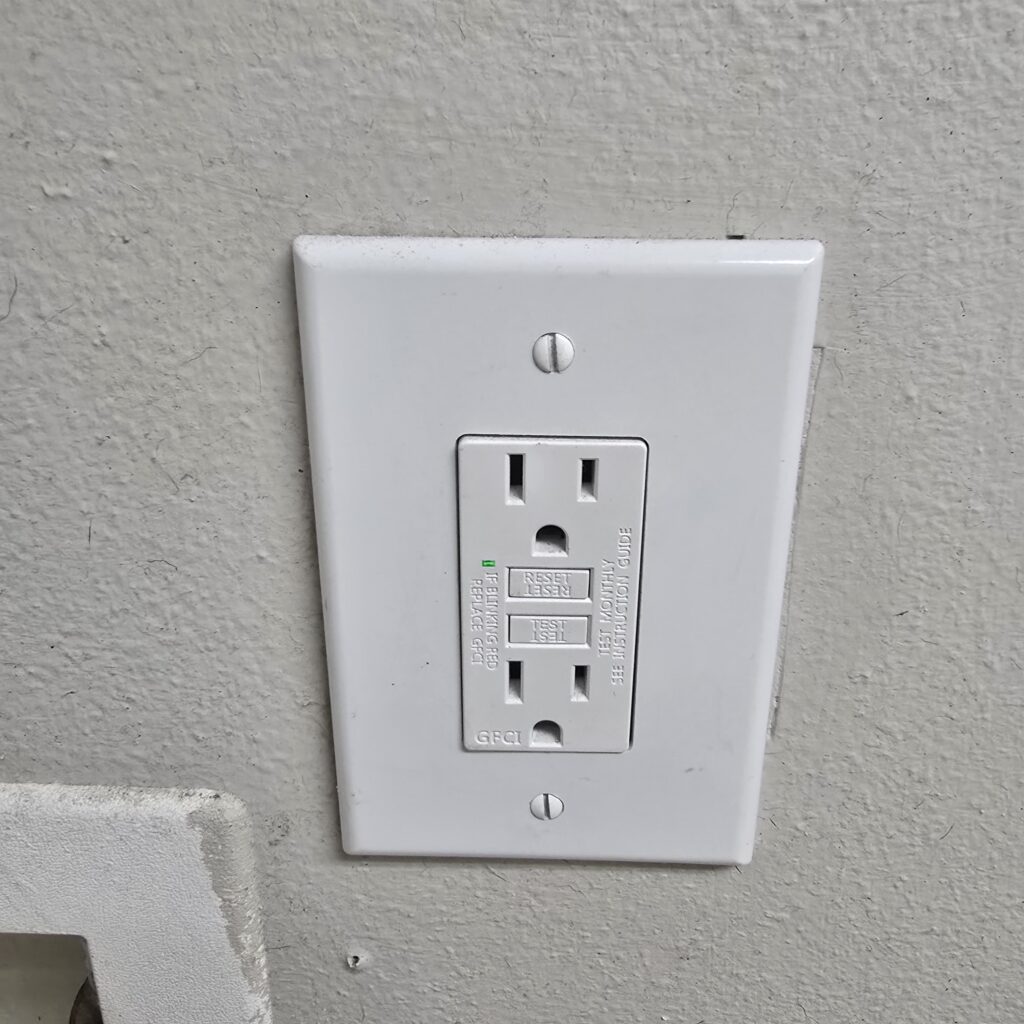
The outlets and light fixtures in your home offer some of the clearest evidence that wiring has aged past its safe service life. Outlets that no longer grip a plug firmly allow arcing at the connection, which generates heat and slowly damages the receptacle. A cover plate that feels warm or looks discolored is a strong indication that a connection behind it is overheating. Buzzing or crackling sounds from an outlet mean current is jumping across a gap it should never cross. If you ever feel a tingle or mild shock when plugging something in, stop using that outlet and call an electrician immediately. Sparks that appear when you insert a plug are another sign of a failing connection that needs prompt attention. These small warnings often precede much larger problems.
Lighting behavior tells its own story about the health of a home’s wiring. Lights that flicker or dim when a large appliance turns on usually signal that circuits are overloaded or connections are loose. Bulbs that burn out far faster than they should can point to loose wiring or excessive heat at the fixture. Lights that brighten and dim on their own may indicate a serious problem at the main connection, which is a hazard that demands immediate professional evaluation. In older homes, light fixtures were often installed without a ground, leaving both the fixture and the switch outside the safety net of a proper ground path. Aging switches that feel warm or make noise are showing the same wear that affects the rest of the system. None of these symptoms should be treated as normal quirks of an old house.
Addressing failing outlets and lighting issues protects your family and improves daily comfort at the same time. An electrician can replace worn receptacles, add GFCI protection in kitchens and bathrooms, and install grounded fixtures throughout the home. Upgrading outlets also creates the opportunity to add the capacity and convenience that modern households expect. Tamper resistant receptacles add an extra layer of protection in homes with young children. Correcting these issues removes hidden fire and shock hazards that have been building for years. A thorough inspection identifies every outlet and fixture that needs attention. Small repairs today prevent the kind of emergencies that strike without warning.
Burning Smells and Heat Warning Signs of Outdated Wiring
Few warning signs are more serious than the smell of burning plastic or the presence of unexpected heat around your electrical system. A burning or fishy odor near an outlet, switch, or panel almost always means a connection is overheating and beginning to melt. That smell comes from insulation and plastic components breaking down under high temperatures, and it should never be ignored. If you detect this odor, you should stop using the affected circuit and contact an electrician without delay. Heat is the enemy of every electrical component, and it is the direct precursor to an electrical fire. Catching a hot connection before it ignites can be the difference between a simple repair and a devastating loss. Your nose is one of the best early warning tools you have.
Physical heat on electrical surfaces is another red flag that too many homeowners overlook. Outlet covers, switch plates, and panel surfaces should always feel cool or at most slightly warm during normal use. A cover plate that is noticeably hot to the touch indicates a connection failing behind the wall. Scorch marks, melted plastic, or brown discoloration around any electrical component confirm that dangerous heat has already occurred. In older homes with aluminum or degraded wiring, these hot spots develop at loose connections that resist the flow of current. The heat builds quietly inside the wall where no one can see it until damage appears on the surface. By the time you notice a scorched outlet, the situation has already become urgent.
When you encounter burning smells, heat, or scorch marks, treating the situation as an emergency is the right response. These signs mean a fire could start at any moment, and waiting even a day introduces real risk. A rapid professional response can locate the failing connection, cut power to it, and repair the hazard before it ignites. Smell burning or see scorched outlets? Click here for our 24/7 emergency electrician service. An electrician arrives with the tools to trace overheating circuits and correct them safely. Acting quickly protects both your home and the people inside it. No electrical warning sign is worth ignoring when your family’s safety hangs in the balance.
Why You Need Professional Electrical Upgrades for Your Older Home
Outdated wiring is one of the leading causes of residential electrical fires, and older homes carry that risk in every wall. A professional evaluation gives you a clear picture of what your system contains and what it needs to become safe. Electricians identify hidden hazards, prioritize the most urgent repairs, and design an upgrade plan that fits your home and budget. Modern wiring, grounded outlets, and updated panels bring an aging home in line with today’s safety standards. These upgrades do more than prevent disaster; they add capacity, improve reliability, and raise the value of your property. Trusting a licensed professional with this work is the smartest way to protect what matters most.
Professional Electrical Inspections Protect Your Older Home
A professional electrical inspection is the foundation of any smart upgrade plan for an older home. During an inspection, a licensed electrician examines the panel, wiring, outlets, and connections for signs of age and damage. They identify outdated materials like knob and tube, aluminum, and cloth insulated wiring that create serious risk. The inspector also checks for missing grounds, overloaded circuits, and defective panels that need immediate replacement. This detailed review turns unseen dangers into a clear, prioritized list of repairs. Knowing exactly what your home needs removes guesswork and gives you real peace of mind.
Inspections also matter greatly when you buy, sell, or insure an older property. Many insurance companies now require documentation of the electrical system before they will issue or renew a policy. A clean inspection report reassures buyers and can smooth the path toward a successful sale. If you have recently moved into an older home, an inspection reveals problems the previous owner may never have addressed. Catching these issues early prevents expensive emergencies down the road. Want a full evaluation of your home’s wiring? Click here for our electrical inspection service. A professional inspection is a small investment that pays off in safety and confidence.
Regular inspections make sense even for homes that seem to be working fine. Electrical problems develop slowly and often hide behind walls where no one can see them. A periodic professional review catches wear and damage before it becomes a hazard. This proactive approach is far cheaper than responding to a fire or a major failure after the fact. An electrician can recommend a sensible schedule based on the age and condition of your system. Staying ahead of electrical problems is one of the best habits a homeowner can build.
Professional Wiring Upgrades Protect Your Older Home
Upgrading the wiring in an older home eliminates the root cause of most electrical dangers. Replacing knob and tube, aluminum, or degraded cloth wiring with modern grounded cable removes fire and shock hazards at the source. New wiring restores a proper ground path and supports the safety devices that current code requires. It also delivers the capacity needed for air conditioning, kitchen appliances, and the growing number of devices in every home. A rewire done right transforms an aging, unpredictable system into one you can trust every day. This kind of upgrade is among the most valuable improvements an older home can receive.
Wiring upgrades often pair naturally with a panel replacement for the best results. A new panel adds circuits, provides modern breaker protection, and gives the upgraded wiring a safe and reliable source. Together these improvements support electric vehicle chargers, whole house surge protection, and other modern additions. Ready to upgrade your home’s electrical service? Click here for our electrical service upgrade. A coordinated upgrade prevents the patchwork of small fixes that never fully solve the problem. Investing in the whole system at once saves money and frustration over time. The result is a home that is safer, more capable, and ready for the future.
Professional wiring work also protects the long term value of your property. Buyers and inspectors view updated wiring as a major asset in an older home. Modern electrical systems reduce insurance concerns and make a property far easier to sell. Beyond the financial benefits, upgraded wiring delivers something priceless in the form of daily peace of mind. You stop worrying about hidden hazards and start enjoying a home that simply works. Skilled electricians complete this work cleanly and efficiently, with minimal disruption to your life.
Why Choose 24/7 Electrical Services and Repairs for Your Older Home
24/7 Electrical Services and Repairs is a locally owned and family operated company that treats every home like our own. We are a licensed Oklahoma electrician, license number 084623, and we bring honest, upfront pricing to every job we take. Our team specializes in panel upgrades and generator installations, and we handle outdated wiring in older homes with skill and care. We offer free local estimates so you know the cost before any work begins. Our reputation is built on doing things the right way, backed by strong ethics and real accountability. When your family’s safety is on the line, experience and integrity matter.
We stand behind our work with a one year labor warranty and a three year panel warranty, so you can trust the results for years to come. Our emergency electrical service is available around the clock, which means help is there when a hazard appears at the worst possible time. We serve McLoud, Shawnee, Tecumseh, Oklahoma City, Norman, Edmond, and communities throughout the surrounding area. From a single outlet repair to a full home rewire, we bring the same commitment to quality on every visit. We take the time to explain what we find and what your options are, with no pressure and no surprises. Homeowners across central Oklahoma trust us to keep their families safe.
If your older home has any of the warning signs described above, do not wait for a small problem to become an emergency. Our licensed team will inspect your system, explain what it needs, and complete the work with honesty and precision. We are ready to help you replace outdated wiring, upgrade your panel, and bring your home up to modern safety standards. Reach out today for a free local estimate and let us protect what matters most to you. Call 24/7 Electrical Services and Repairs now at (405) 915-3280 to schedule your service. Your family’s safety is worth the call.