
How to Tell If Your Garage Wiring Can Handle Power Tools and a Freezer
Your garage works hard during the summer, and the wiring behind those walls carries every bit of that load. A table saw, an air compressor, a battery charger, and a chest freezer all pull current from the same circuits, and many garages were never built to run them together. When that wiring falls short, you end up with tripped breakers, warm outlets, and a freezer full of thawing food. Knowing how to tell if your garage wiring can handle power tools and a freezer protects both your equipment and your home. Older garages in McLoud and across the Oklahoma City metro often run on a single fifteen amp circuit shared with the overhead lights and the door opener. That kind of setup struggles the moment you add heavy motors and a freezer that cycles on and off all day long. The good news is that the warning signs are easy to spot once you know exactly what to look for. This guide walks through those signs, shows you how to test your own setup at home, and explains the point where it makes sense to bring in a licensed electrician.
Signs Your Garage Wiring Cannot Handle Power Tools and a Freezer
Garage wiring tells you when it is overloaded long before something fails for good, and most homeowners simply miss the early signals. The trouble usually starts small, with a breaker that trips once a month, then climbs to a breaker that trips every time the saw and the freezer run at the same moment. Power tools draw a heavy surge of current the instant their motors start, and a freezer compressor adds its own startup spike each time it kicks on. When both demands land on a circuit that was sized for lights and a few outlets, the wiring runs hot and the breaker reacts. Paying attention to these signs helps you catch a weak circuit before it damages your tools, spoils your food, or creates a fire risk inside the wall. If you already notice repeated problems in your shop, our garage wiring service can pinpoint the cause and bring the space up to a safe standard.
Tripped Breakers Are a Warning Your Garage Wiring Cannot Handle the Load
A breaker that trips during normal use is the clearest sign that your garage wiring cannot handle the load you place on it. The breaker is a safety device, and its entire job is to cut power before the wire behind it overheats and becomes a hazard. When you flip on a table saw while the freezer compressor is already running, the combined draw can push a fifteen amp circuit past its limit in a fraction of a second. The breaker reads that overload and shuts the circuit down to protect the wiring inside your walls. Many homeowners respond by simply resetting the breaker and trying again, which only repeats the same dangerous cycle. Each trip is the system telling you that the demand is too high for the circuit that was installed. Treating that warning as a nuisance rather than a real problem is how small wiring issues grow into expensive repairs.
The pattern of the tripping often reveals exactly what is overloaded and when. A breaker that trips only when two big machines run together points to a shared circuit that lacks the capacity for both. A breaker that trips the instant a single power tool starts usually points to a motor surge that the circuit cannot absorb. A breaker that trips at random throughout the day, even with nothing running, can signal a loose connection or damaged wire rather than a simple overload. Watching for these patterns gives you a strong clue about the kind of fix the garage actually needs. Writing down when each trip happens and what was running at the time turns guesswork into useful information. That record becomes a real shortcut for any electrician who comes to diagnose the circuit.
Ignoring repeated trips puts both your equipment and your home at genuine risk over time. A freezer that loses power because the breaker tripped overnight can thaw a full load of meat before you ever notice in the morning. Power tools that brown out mid cut can stall, kick back, or burn out their motors from the strain of low voltage. The wiring itself suffers as well, since every overload heats the conductors and slowly degrades the insulation around them. Over months and years, that heat damage can lead to scorched outlets, melted wire jackets, and connections that arc inside the wall. A breaker that keeps tripping is not a flaw in the breaker; it is the breaker doing its job correctly. The right response is to upgrade the circuit, not to keep resetting the switch and hoping for a better outcome.
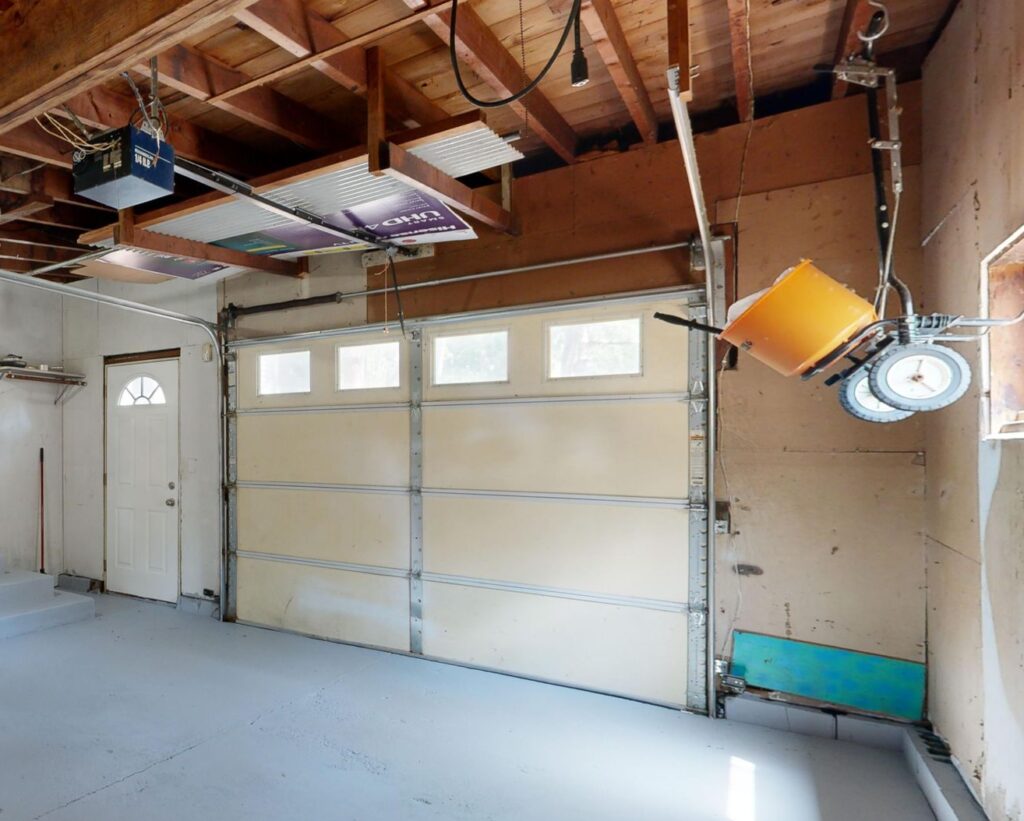
Dimming Lights Reveal Garage Wiring That Cannot Handle Power Tools
Lights that dim or flicker when a tool starts up reveal garage wiring that cannot handle the power tools you are asking it to run. When a motor first spins up, it pulls several times its normal running current for a brief moment, and that surge causes a voltage sag across the whole circuit. If your shop lights share that circuit, you will see them dip noticeably each time the saw, the grinder, or the compressor fires up. A quick flicker now and then can be normal on a busy circuit, but lights that dim hard or stay dim under load point to a real capacity problem. The wiring simply cannot deliver enough current to feed the motor and keep the lights bright at the same time. That voltage sag stresses everything connected to the circuit, not just the lamps overhead. Seeing it happen is a strong sign that the garage needs more capacity than it currently has.
The severity and frequency of the dimming tell you how strained the circuit really is. A faint, momentary flicker once in a while usually means the circuit is near its comfortable limit but still managing. Lights that drop to a dull glow and take a second to recover mean the surge is pulling the voltage down far enough to matter. Lights that flicker even when no large tool is running can point to a loose neutral or a failing connection somewhere in the run. These different behaviors each call for a different look under the cover plate by a trained eye. A licensed electrician can measure the voltage drop directly and confirm what the lights are already showing you. The flickering is data, and reading it correctly saves time and money on the repair.
Chronic dimming does more than annoy you while you work in the shop. The low voltage that causes the dim also strains motors, since a motor starved of voltage draws even more current to do the same work. That extra current produces more heat in the windings and shortens the life of every tool on the circuit. Sensitive electronics, like a battery charger or a smart freezer control board, can glitch or fail when the voltage swings up and down repeatedly. Even LED shop lights, which usually handle voltage swings well, can flicker and wear out faster under constant sag. The dimming is a symptom of a circuit working far beyond its comfortable range. Correcting the underlying capacity problem protects your tools, your lights, and your wallet all at once.
Warm Outlets and Burning Smells Mean Garage Wiring Cannot Handle a Freezer
An outlet that feels warm to the touch is a serious sign that your garage wiring cannot handle a freezer plugged into it. A freezer runs in long cycles throughout the day, and that steady draw keeps current flowing through the outlet and its connections for hours at a time. A healthy outlet on a properly sized circuit should stay cool or only slightly warm under that kind of load. An outlet that feels hot points to a loose connection, an undersized wire, or a circuit carrying more than it should. Heat at the outlet means resistance is building somewhere in the connection, and resistance turns electricity into heat instead of useful work. That heat can soften the plastic of the outlet, loosen the contacts further, and feed a slow cycle of damage. Touching the cover plate and feeling real warmth is your cue to stop and have the circuit checked.
A burning or fishy smell near an outlet or panel takes the warning to an even more urgent level. That odor usually comes from overheated insulation, melting plastic, or a connection that has begun to arc and char. It often appears right before visible scorch marks show up around the outlet or the breaker. A freezer left plugged into a struggling outlet can keep that connection hot day and night, which is exactly the condition that leads to electrical fires. If you ever notice that smell, unplug the freezer, avoid using the circuit, and call a licensed electrician without delay. The smell is not something to monitor over the coming weeks; it is a reason to act the same day. Garages store flammable items like gas cans, sawdust, and cardboard, which makes any heat problem far more dangerous than it would be elsewhere.
A freezer deserves its own protected circuit precisely because of how it runs and what it holds. A standard chest freezer draws only a couple of amps while running, but it cycles on and off constantly and surges each time the compressor starts. When that freezer shares a circuit with power tools, every tool you use raises the risk of tripping the breaker and silently killing the freezer. You might walk out the next morning to a puddle and a freezer full of spoiled food, with no warning that the power ever dropped. Plugging a freezer into a shared, overloaded garage circuit is a gamble that often ends in lost groceries. A dedicated circuit installation gives the freezer a clean line of its own, free from the surges of your tools. That single upgrade removes the most common cause of a thawed freezer in the garage.
How to Test If Your Garage Wiring Can Handle Power Tools and a Freezer
You can learn a great deal about your garage circuits with a few simple checks before any electrician ever sets foot in the building. The goal is to understand how much capacity each circuit has and how much demand you are placing on it. Most overloaded garage circuits fail because the math never added up in the first place, not because of any sudden fault. By reading your breaker, counting your loads, and checking your wire size, you can see for yourself where the limits are. These checks will not replace a professional inspection, but they tell you quickly when a circuit is clearly outmatched. They also help you describe the problem accurately when you do call for help. A little knowledge here turns a confusing situation into a clear plan for what your garage needs.
Check the Breaker Size to See If Garage Wiring Can Handle Power Tools
The breaker size is the first number to check when you want to see if your garage wiring can handle power tools. Open your electrical panel and look for the breaker that feeds the garage outlets, which will have a number stamped on its switch. Most older garage circuits use a fifteen amp breaker, while newer or upgraded ones often use a twenty amp breaker. That number sets the absolute ceiling for how much current the circuit can carry before the breaker trips. A fifteen amp circuit at standard household voltage can deliver roughly eighteen hundred watts at its peak limit. A twenty amp circuit raises that ceiling to about twenty four hundred watts at the same voltage. Knowing your breaker size gives you the starting point for every other calculation about your garage.
The breaker number alone does not tell the whole story, because circuits are not meant to run at their full rating for long stretches. Electrical practice treats a circuit as comfortable at around eighty percent of its rated capacity for any load that runs continuously. That means a fifteen amp circuit is best kept under about fourteen hundred watts of steady draw, and a twenty amp circuit under about nineteen hundred watts. A freezer that runs for long cycles counts as exactly the kind of continuous load this rule is built around. When you subtract that freezer from the available capacity, you see how little room is left for power tools. This is why a single fifteen amp circuit struggles so badly once a freezer and a saw share it. Reading the breaker and applying the eighty percent guideline shows the limit in plain numbers.
The breaker size also has to match the wire behind it, and a mismatch here is genuinely dangerous. A twenty amp breaker installed on wiring rated only for fifteen amps will allow more current than the wire can safely carry. In that situation, the wire can overheat before the breaker ever trips, which defeats the entire purpose of the breaker. If you find a breaker that looks oversized for an old, thin garage wire, treat that as a red flag worth a professional review. Heavy power tools like welders and large compressors often need a dedicated two hundred forty volt circuit rather than a standard outlet. Adding those tools usually calls for a new circuit and sometimes more capacity at the panel itself. Checking the breaker is simple, but acting on what you find should involve a licensed electrician.
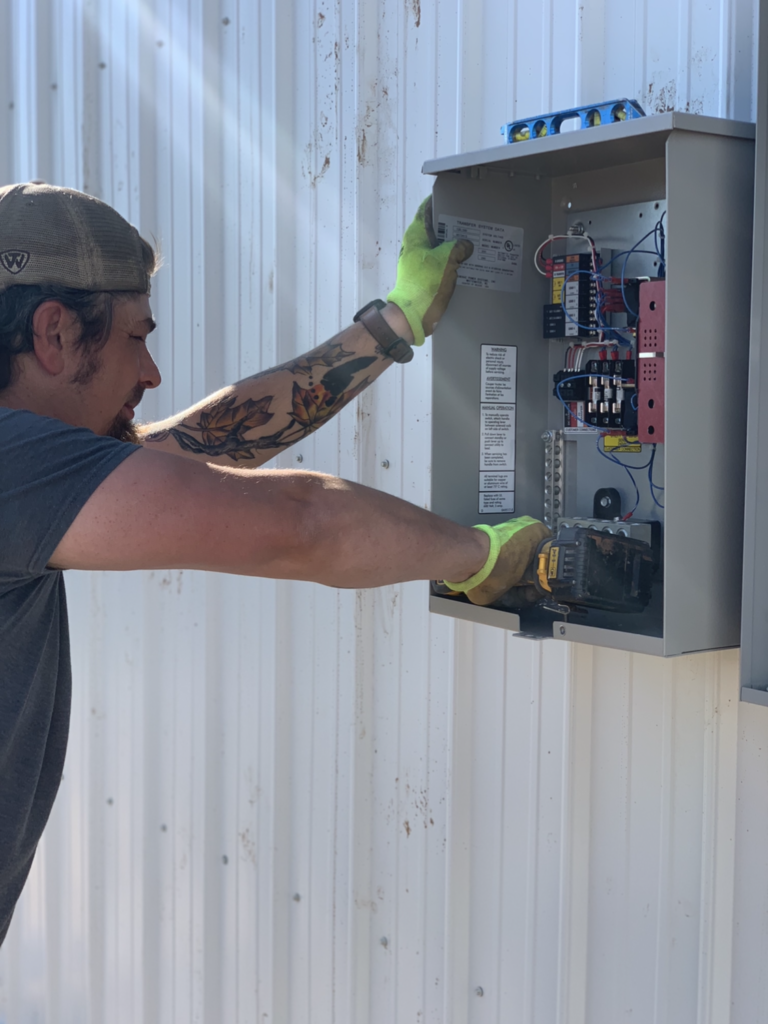
Add Up the Amperage to Confirm Garage Wiring Can Handle a Freezer
Adding up the amperage of your equipment is the most reliable way to confirm that your garage wiring can handle a freezer alongside your tools. Start by listing every device you might run at the same time, including the freezer, the lights, and any tool you reach for. Each device lists its draw on a label or in its manual, usually in amps or in watts that you can convert to amps. A typical chest freezer pulls only about one to two amps while running, but it surges higher each time the compressor starts. A table saw can pull close to fifteen amps at full cutting load, which on its own nearly fills a fifteen amp circuit. When you add those numbers together, you quickly see how fast a shared circuit reaches its ceiling.
The startup surge matters just as much as the running numbers, and many homeowners overlook it completely. Motors in tools and freezer compressors draw several times their normal current for the brief moment they spin up. A freezer that runs at one and a half amps might surge to five or six amps at the instant the compressor engages. If a power tool starts at the same moment, those two surges can stack and trip the breaker even when the running totals looked fine. This is exactly why a circuit that seems to have spare capacity on paper still trips in real use. Planning around the surge, not just the steady draw, is the key to a circuit that holds. Building in headroom for those spikes keeps the breaker from cutting out at the worst possible time.
Once you total your loads, compare that number against the safe capacity you found from the breaker size. If your combined draw, including a margin for startup surges, lands well under the eighty percent limit, the circuit may be adequate for now. If the total sits close to or above that limit, the circuit is overloaded and needs to be split or upgraded. In most real garages with a freezer and a few tools, a single circuit simply does not provide enough room. The honest answer for most home shops is a freezer on its own dedicated line and a separate, properly sized circuit for the tools. Doing this math yourself gives you a clear picture before you ever spend a dollar. It also makes the conversation with your electrician faster and far more productive.
Inspect the Wire Gauge to Prove Garage Wiring Can Handle the Load
Inspecting the wire gauge is the final check that proves whether your garage wiring can handle the load you want to run. Wire gauge describes the thickness of the copper conductor, and thicker wire safely carries more current than thinner wire. Fourteen gauge copper wire is rated for fifteen amp circuits, while twelve gauge copper is rated for twenty amp circuits. Ten gauge copper steps up further and supports thirty amp circuits used for larger equipment. You can sometimes read the gauge printed on the cable jacket where it enters the panel or a junction box. Matching the wire gauge to the breaker is one of the most important safety steps in any electrical system.
The length of the wire run plays a quiet but real role in how much load the wiring can support. Electricity loses a little voltage over distance, and a long run from the panel to a far garage outlet drops more voltage than a short one. That voltage drop leaves tools and the freezer with less than they need, which makes motors run hotter and work harder. A garage set well away from the main panel may need a heavier wire gauge just to overcome that distance. This is why two garages with the same breaker can perform very differently in real use. An electrician accounts for run length when sizing wire so the equipment at the far end still gets full voltage. Long runs are common with detached garages and shops, so this factor deserves a careful look.
Older homes bring an extra wrinkle worth checking before you add heavy loads. Some houses built decades ago used aluminum wiring, which behaves differently from copper and needs proper connections to stay safe. Aluminum expands and contracts more, which can loosen connections over time and create the heat problems described earlier. If your garage wiring is aluminum, adding a freezer and power tools without a professional review is a real risk. A licensed electrician can identify the wire type, confirm the gauge, and verify that every connection is rated for the load. When the existing wire cannot support what you need, the safe path is new wiring sized for the job rather than pushing old conductors past their limit. Proving the wire gauge is right is what separates a safe upgrade from a fire waiting to happen.
Why You Need a Professional to Upgrade Garage Wiring for Power Tools and a Freezer
Once you know your garage wiring falls short, the next step is a professional upgrade that matches the wiring to the real demand. A licensed electrician does more than swap a breaker; they size the circuit, the wire, and the panel to carry your freezer and your tools together with room to spare. Garage circuits also carry strict code requirements, including ground fault protection on outlets, that exist to keep you safe in a damp and busy space. Doing this work correctly protects your home, your equipment, and the people who use the garage every day. The cost of a proper upgrade is small next to the cost of a fire, a ruined freezer, or a burned out tool. A professional turns a guessing game into a system you can trust.
A Dedicated Circuit Helps Your Garage Wiring Handle a Freezer Safely
A dedicated circuit is the single most effective way to help your garage wiring handle a freezer safely. A dedicated circuit serves one appliance and nothing else, which means the freezer never competes with your tools for current. With its own line, the freezer keeps running smoothly even while a saw or a compressor pulls hard on a separate circuit. That separation removes the most common reason freezers fail in a garage, which is a tripped shared breaker. A dedicated freezer circuit also makes it far easier to spot a problem, since nothing else on the line muddies the picture. For food you depend on, that reliability is well worth the modest cost of one new circuit.
Installing a dedicated circuit involves more than running a new wire from the panel to the freezer. The electrician must confirm the panel has an open slot, size the new breaker and wire for the freezer, and route the cable safely through the garage. Garage outlets also require ground fault protection under current code, which guards against shock in a space that often sees moisture and concrete floors. A trained electrician handles all of these requirements as part of a single, clean installation. The result is a circuit that meets code and protects both the freezer and the people nearby. This is detailed work that rewards experience and proper tools.
The payoff of a dedicated circuit shows up in everyday peace of mind. You can run your shop without ever worrying that the next cut will knock out the freezer in the corner. The freezer holds its temperature through your busiest projects, summer heat included, without a single nuisance trip. Your food stays frozen, your tools run on their own capacity, and the whole garage feels far less fragile. That kind of reliability is exactly why dedicated circuits are standard practice for freezers, refrigerators, and other appliances that must never lose power. Want a freezer that keeps running no matter what you plug in next? Click here to learn about our dedicated circuit installation service.
A Panel Upgrade Lets Garage Wiring Handle Power Tools Without Tripping
A panel upgrade is often what lets garage wiring handle power tools without tripping the breaker again and again. When a garage needs several new circuits for tools, a freezer, and proper lighting, the existing panel may not have the open slots or the capacity to feed them. An upgraded panel provides more breaker spaces and, when needed, more total amperage for the whole home. That added capacity is what makes room for the heavy circuits a real workshop demands. Without it, every new circuit competes for limited space and the garage stays starved for power. A panel upgrade clears that bottleneck at the source.
Heavy power tools change the equation in ways a standard outlet cannot meet. Welders, large air compressors, and dust collectors often require two hundred forty volt circuits and substantial amperage to start and run. Feeding those tools means new breakers, heavier wire, and sometimes a subpanel mounted right in the garage for convenience. A subpanel brings power closer to the work and reduces the long runs that cause voltage drop. An electrician designs this layout so each tool gets the capacity it needs without overloading the system. This is the kind of planning that turns a cramped garage into a shop that actually works.
Investing in the right panel and circuits pays you back every time you flip a switch. Your tools start strong, run at full voltage, and last longer because they never struggle for current. The freezer hums along on its own line, untouched by the demands of the workbench. You stop walking to the panel to reset breakers and start spending that time on the project in front of you. A properly upgraded garage also adds real value and safety to your home for years to come. Ready to stop tripping breakers in your shop? Click here to explore our electrical service upgrade options.
Why Choose 24/7 Electrical Services and Repairs for Garage Wiring Upgrades
Homeowners across McLoud and the Oklahoma City metro choose 24/7 Electrical Services and Repairs for garage wiring upgrades because we treat your safety as the priority it deserves. We are a licensed Oklahoma electrician, license number 084623, and we are locally owned and family operated. That local roots means we understand the older garages, the long detached shop runs, and the summer heat that pushes freezers hard in our part of the state. We size every circuit, wire, and panel to the real loads you plan to run, never to a guess. Honest, upfront pricing means you know the cost before we start, with no surprises along the way. Free local estimates make it easy to find out exactly what your garage needs.
Our team specializes in panel upgrades, dedicated circuits, and the heavy wiring that workshops and freezers depend on. We also stand behind our work with a one year labor warranty and a three year panel warranty, so you can trust the result for the long haul. When an electrical problem cannot wait, our 24/7 emergency service means a licensed electrician is ready when you need one most. We handle ground fault protection, code requirements, and proper wire sizing as a matter of course, not as an afterthought. Every job is done to keep your family and your home safe. That commitment to ethos is the foundation of everything we install.
Getting started is simple, and a safe garage is closer than you might think. Have your tools and freezer ready, and let us build the wiring that can finally support them all at once. If you want a professional to confirm your setup, our garage wiring service and electrical inspection can map out every circuit in your shop. We will walk you through what we find and recommend only the work your garage truly needs. Call 24/7 Electrical Services and Repairs today at (405) 915-3280 for a free local estimate, and let us make your garage safe and ready for everything you plug into it.